Precision Movement Intelligence
Traditional load monitoring relies heavily on volume metrics: total distance, high-speed running meters, sprint counts. While valuable, these measures miss the biomechanical nuances that determine how efficiently a player is moving.
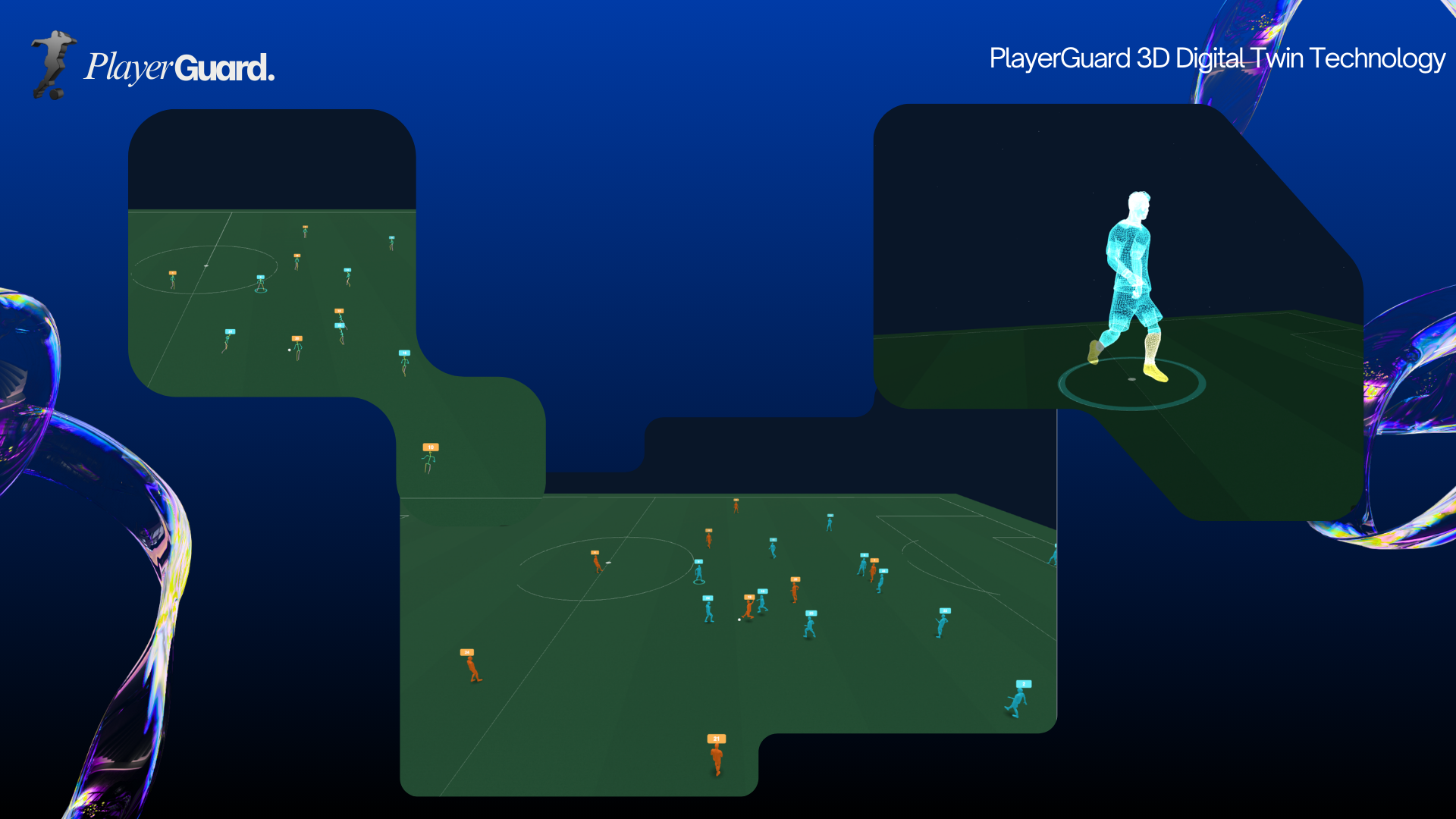
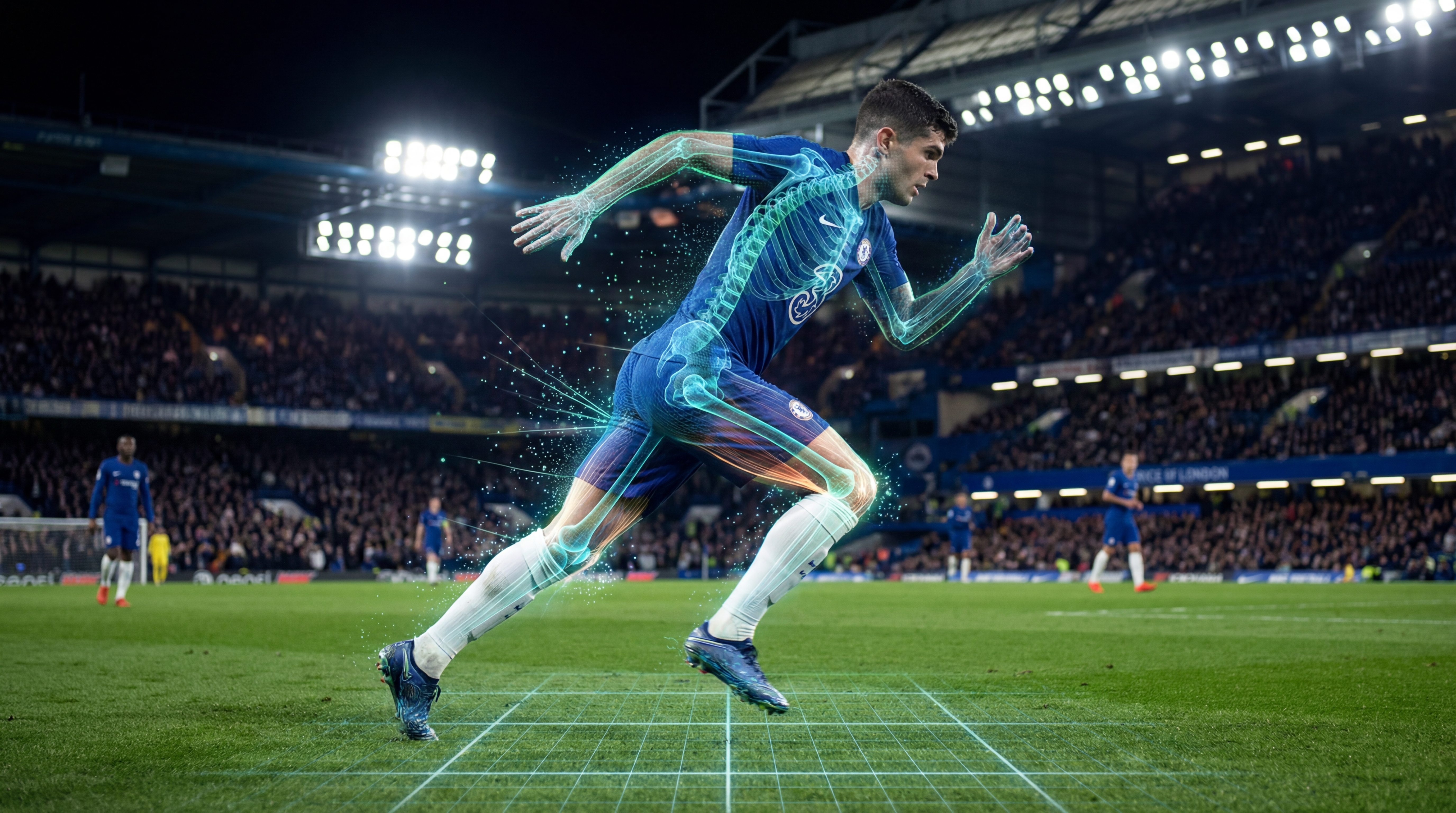
3D motion capture technology has revolutionized our ability to quantify movement quality. Using advanced markerless skeletal tracking, we can now measure vertical impact forces, joint angles, and movement asymmetries with precision impossible from 2D data alone.
At PlayerGuard, our 3D analysis processes 21 anatomical tracking points at 50 frames per second. This granular detail allows us to detect subtle changes in movement mechanics — such as shifts in deceleration patterns or landing asymmetries — that indicate elevated mechanical load.
From Raw Data to Actionable Intelligence
Raw biomechanical data requires intelligent synthesis. This is where AI-powered analysis becomes essential.
PlayerGuard's biomechanical engine continuously compares each player's current movement patterns against their individual baseline. How does today's sprint mechanics compare to this player's optimal output? How is cumulative vertical load trending across the week? Are deceleration patterns showing asymmetry that wasn't present in earlier sessions?
By synthesizing hundreds of variables simultaneously, our system surfaces insights that would be impossible to detect through manual observation alone.
The output is a real-time Readiness Score (0-10) for each player, giving performance staff an objective measure to inform rotation and load management decisions.
From Insight to Action
Data without actionable guidance is merely academic. PlayerGuard's platform translates biomechanical analysis into specific, evidence-based recommendations for performance staff.
When a player's load metrics indicate elevated mechanical stress, the system provides context: What's driving the score? Which specific biomechanical factors are contributing? How does this compare to the player's historical patterns?
This allows coaches and performance staff to make informed decisions about training load, match minutes, and rotation — grounded in objective biomechanical evidence rather than intuition alone.
Implementation Considerations
Deploying biomechanical monitoring at scale requires careful planning. Data collection must integrate seamlessly into existing workflows — performance staff cannot add hours of manual analysis to their routine.
PlayerGuard is designed for frictionless integration. Our system ingests standard tracking data formats and delivers insights through intuitive dashboards and a natural language AI interface. Staff can query the system directly: 'Who's showing elevated load this week?' or 'How does this player's current readiness compare to last month?'
Data privacy and security are paramount. PlayerGuard is built as a GDPR-compliant, EU-native platform. All athlete data is processed and stored within European data centers, meeting the requirements of club legal departments and player associations.
Conclusion
The convergence of 3D motion capture and machine learning represents a significant evolution in performance science. We are moving from reactive load management — adjusting after fatigue impacts performance — to proactive optimization based on objective biomechanical evidence. For elite football clubs, the ability to quantify movement quality at scale offers a competitive advantage: better-informed rotation decisions, optimized training loads, and ultimately, maximized squad availability when it matters most.
References
- Buchheit M, Simpson BM. (2017). Player tracking technology: half-full or half-empty glass?. International Journal of Sports Physiology and Performance.
- Akenhead R, Nassis GP. (2016). Training load and player monitoring in high-level football. British Journal of Sports Medicine.
- Bourdon PC, et al. (2017). Monitoring athlete training loads: consensus statement. International Journal of Sports Physiology and Performance.